Sleep and Longevity: The Missing Link to Healthspan
Sleep and Longevity: How Better Sleep Extends Healthspan
Quality sleep is one of the highest ROI longevity tools we have. It supports brain waste clearance, cellular repair, immune tuning, and hormone regulation. If your sleep is inconsistent, most supplements and biohacks become expensive damage control. Start with a consistent wake time, a real wind-down, and fewer late-day sleep disruptors.
When people ask me where to start with longevity…
They expect me to say peptides, supplements, or some exotic protocol.
Here’s the unsexy reality: if your sleep is a mess, everything else is just damage control.
In this episode of The Longevity Loop, I sat down with sleep coach Devin Burke, founder of Sleep Science Academy, to talk about what’s actually happening when you sleep, why it shows up everywhere in healthspan outcomes, and how to improve it without building your entire life around a complicated routine.
If you want your labs, wearables, training, and nutrition to work harder, sleep is the multiplier.
What happens in your body during sleep (and why it affects longevity)?
Sleep feels passive. It isn’t.
While you’re out, your body runs a full-system maintenance cycle. The NIH frames sleep as essential for health and function, not optional downtime.
Here are the big levers that matter for longevity:
1) Brain “waste clearance” and cognitive resilience
Your brain has a built-in cleanup process that becomes more active during sleep. Think of it as nightly maintenance: less cleanup over time means more biological clutter.
That matters because long-term brain health is not just about supplements and puzzles. It’s also about giving your nervous system enough time in the conditions where repair and clearance are more likely to happen.
2) Cellular repair and immune tuning
Sleep is when your body prioritizes maintenance work. Immune function, recovery, and resilience are all meaningfully influenced by sleep quality and consistency.
3) Hormone and appetite regulation
If you’ve ever noticed that bad sleep makes you hungrier, crankier, and more impulsive, you’re not imagining it.
Sleep impacts the systems that govern appetite, stress response, and glucose control. The CDC also highlights links between insufficient sleep and chronic health conditions.
That’s why sleep problems often show up as:
> higher cravings for ultra-processed food
> worse next-day decision-making
> reduced training output
> mood volatility
> “Why is my glucose spiking more than usual?”
How does poor sleep accelerate aging and disease risk?
If great sleep is a longevity asset, chronic poor sleep is like paying interest on a loan you did not mean to take.
Here’s what tends to move in the wrong direction when sleep is short, fragmented, or inconsistent:
Metabolic drift
Insufficient sleep is associated with higher risk for metabolic issues over time, including type 2 diabetes risk.
This is where people get frustrated because they think they have a nutrition problem, but they actually have a sleep consistency problem.
Cardiovascular risk stacking
The CDC links insufficient sleep with heart disease risk factors and chronic disease associations.
If you’re over 50 and serious about longevity, sleep is not a “nice to have.” It’s a core risk lever.
Brain aging signals
If deep sleep gets consistently disrupted, the systems tied to restoration and next-day performance tend to degrade. Over years, that matters.
Bottom line: if you’re proud of “getting by” on five or six hours, you may be trading long-term healthspan for short-term productivity theater.
How many hours of sleep do you need for longevity?
Most healthy adults land in a 7 to 9 hour range. The NIH emphasizes that sleep needs differ person to person, but consistency and adequate duration matter for health.
The higher-value question is not “How long was I in bed?” but “How well did I sleep?”
Here’s what to watch:
Total sleep time
How many hours were you actually asleep?
Sleep efficiency
Roughly: how much of your time in bed was spent sleeping (not tossing, scrolling, or thinking about tomorrow)?
Sleep architecture
You want enough deep sleep and REM sleep across the night. Each stage plays a different role in recovery, memory, and emotional regulation.
Your “right amount” of sleep is the amount that lets you:
> wake up without feeling wrecked most days
> perform mentally and physically without caffeine carrying you
> maintain stable mood, appetite, and training capacity over time
And yes, needs shift. You may need more sleep during hard training blocks, illness recovery, high stress periods, or major life transitions.
What are deep sleep and REM sleep, and why do they matter?
People love to chase deep sleep metrics like it’s a stock chart.
Here’s the cleaner framing:
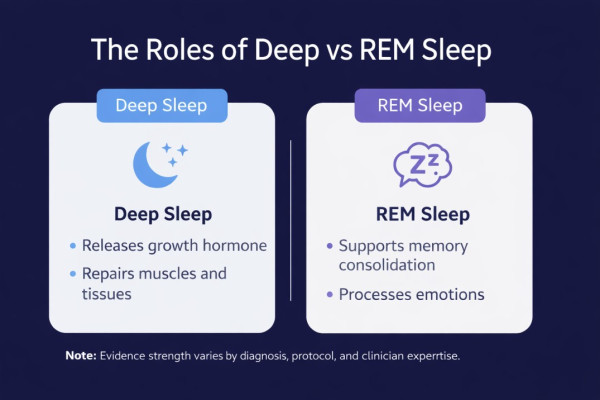
> Deep sleep tends to support physical restoration and recovery.
> REM sleep supports learning, memory consolidation, and emotional processing.
If your tracker shows low deep sleep, do not panic. Use it as a signal to examine:
> late caffeine
> late alcohol
> inconsistent bedtime and wake time
> room temperature and light
> stress that is not being closed out before bed
Trackers are tools, not judges.
Could sleep apnea be sabotaging your longevity?
This is the “hidden boss level” for a lot of people over 50.
If you have any of these, treat it seriously:
> loud snoring
> witnessed pauses in breathing
> waking up gasping or choking
> morning headaches
> daytime sleepiness
> high blood pressure that’s hard to control
If you suspect apnea, a sleep evaluation is not overkill. It’s a high-ROI move because untreated apnea can quietly crush sleep quality and increase downstream risk.
How can you improve sleep quality fast (without complicated routines)?
Most people want a hack.
The honest answer is that sleep responds best to boring consistency.
1) Lock your wake time first
This is the cornerstone. Pick a wake time you can keep seven days a week.
Once wake time is stable, bedtime becomes simple math. Work backward from the sleep duration you need.
2) Build a real wind-down buffer
Most people process their entire day for the first time when their head hits the pillow.
That is a terrible strategy.
Create a 10 to 15 minute “off-ramp”:
> stretching
> breathing
> journaling
> a short easy walk
> reading on paper
No email. No planning. No doom-scrolling.
3) Control light, temperature, and noise
Morning: get bright light early, ideally outdoors
Night: dim and warm your lights
Room: cooler generally works better for many people
Noise: if your environment is loud, consistent sound can help (not blasting)
4) Watch the “helpers” that backfire
The classics:
> late caffeine
> nightly alcohol
> heavy late meals
These are some of the highest-impact changes because they improve sleep quality without adding complexity.
Sleep longevity checklist
If you want a simple starting stack, here it is:
Tonight
> keep wake time the same as usual tomorrow
> do a 10 minute wind-down (no screens)
> cool the room a bit
> avoid alcohol close to bedtime
> stop caffeine earlier than you think you need to
This week
> get morning light daily
> keep bedtime within a consistent window
> move your body most days
> reduce late heavy meals
This month
> screen for sleep apnea risk if you snore or feel unrefreshed
> if insomnia is chronic, stop “trying harder” and get a structured plan
> use trackers for trends only, not nightly judgment
A note from me
If you take nothing else from this, take this:
Do not bring your whole day into your night.
A short buffer between life and bed is one of the cheapest, highest-leverage longevity interventions available. Your nervous system settles, and your body does what it is designed to do.
Your supplements, labs, training, and wearables work harder when sleep is doing its job first.
Cheers,
Brent
FAQs about Sleep and Longevity
How many hours of sleep do I need for longevity?
Most adults do best with 7 to 9 hours of actual sleep. The better test is daytime function, mood stability, and recovery, not just a single number.
Are sleep trackers like Oura or Whoop worth it?
They can be useful for trends in total sleep, consistency, and recovery. If tracking increases anxiety or perfectionism, stop tracking and focus on behavior first.
Can I catch up on sleep on weekends?
Extra sleep can help you feel better short-term, but it’s not a full fix for chronic inconsistency. Long-term, consistency usually wins.
Do naps hurt or help sleep?
Short naps (10–20 minutes) help many people without harming nighttime sleep. If you have insomnia, frequent naps often make nighttime sleep harder.
What is the single most important change for better sleep?
A consistent wake time plus a short wind-down buffer before bed. It stabilizes your circadian rhythm and makes every other tactic more effective.
Disclaimers
Medical disclaimer:
This article is for educational purposes only and is not intended to provide medical advice, diagnose, treat, cure, or prevent any disease. Always consult a qualified healthcare professional before making changes to your sleep, medications, or health regimen.
Affiliate disclosure:
Spannr may receive compensation if you click on certain links and purchase products or services. This helps support our work and does not affect the price you pay or the objectivity of our content.
HIPAA / PHI notice:
Do not send personal medical information, lab results, or protected health information to Spannr via email or unsecured channels. Always use secure, approved platforms when sharing sensitive health data with your care team.
About the Author