Biological Dentistry & Longevity: What Your Mouth Reveals
Is Biological Dentistry the Missing Link in Your Longevity Strategy?
Biological dentistry treats the mouth as an early-warning system for aging and disease. By targeting inflammation, oral pathogens, toxic materials, airway and bite issues, and the oral microbiome, it reduces cardiovascular, cognitive, and metabolic risks that accelerate biological aging. Your dentist may impact your lifespan more than your primary care doctor.
What Does a Biological Dentist Check (and Why It Matters for Longevity)?
Brent here. At last year’s Healthspan Optimization Summit in Austin, I listened to Dr. Dominik Nischwitz (Dr. Dome) and had a rare “everything makes sense now” moment. I’d always heard oral health impacts total-body health, but I didn’t understand the scale.
Then I booked a biological dentist.
Three and a half hours later, I felt like I had undergone a full-body longevity evaluation—except it happened in a dental chair.
Here’s what they checked:
> Blood testing and mineral balance
> Carotid artery ultrasound
> Oral microbiome sequencing
> Ozone treatment for microbial control
> Bite, airway, and craniofacial mechanics
> Inflammation mapping
> Toxicity screening
This wasn’t a “cleaning.” It was systems biology… via the mouth.
Biological dentistry views the mouth as an early-warning system for aging.
Instead of treating teeth like isolated objects, it examines how oral infections, materials, and inflammation drive cardiovascular disease, dementia, fatigue, gut dysfunction, and accelerated biological age.
Most people think dental care ends at “brush and floss.” Biological dentistry sees your mouth as a longevity organ.
How Oral Health Affects Heart Disease, Dementia, and Biological Age
The oral–systemic connection is no longer controversial; it’s one of the most replicated findings in preventive medicine.
Heart Disease & Metabolic Aging
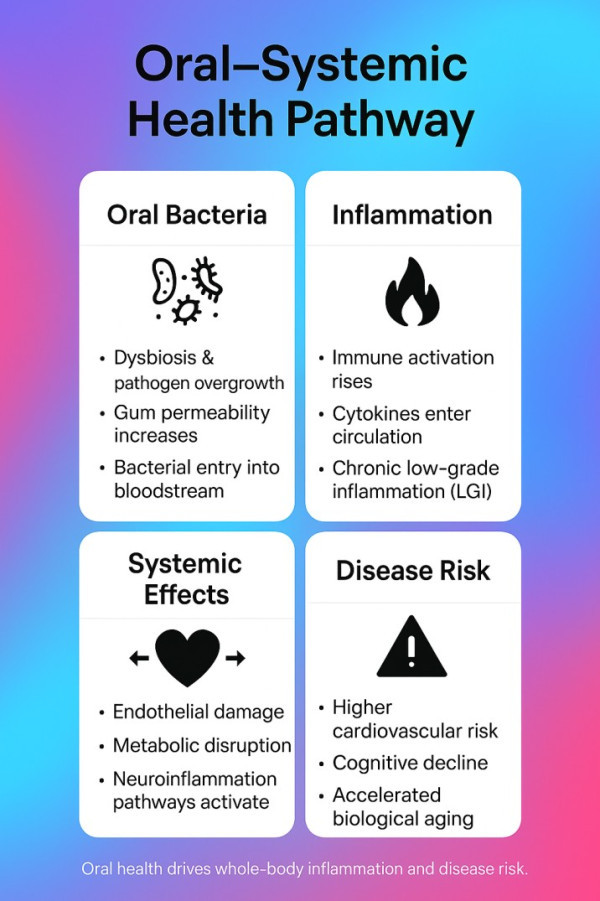
Inflamed gums allow bacteria into the bloodstream. These pathogens increase clotting factors, damage endothelial tissue, and contribute to arterial plaque.
Research shows:
> Gum disease increases heart attack risk by 28%
> Brushing 3× daily reduces atrial fibrillation by 10%
> Same study: heart failure risk drops 12%
Cardiovascular aging often begins in the mouth.
Brain Health & Dementia
This is the part everyone underestimates.
Porphyromonas gingivalis—an oral pathogen—is consistently found in the brains of Alzheimer’s patients.
It triggers neuroinflammation, releases toxic proteases, and accelerates cognitive decline.
Oral bacteria can travel:
> Through the trigeminal nerve
> Through the bloodstream
> Through damaged gum tissue
If you care about your brain, you should care about your gums.
Biological Age & Systemic Inflammation
Periodontal disease fuels low-grade inflammation (LGI), raising CRP and cytokines associated with:
> cardiovascular disease
> insulin resistance
> accelerated epigenetic aging
Your gums aren’t just irritated—they may be raising your all-cause mortality risk.
What Daily Oral Habits Support Longevity and Lower Inflammation?
Simple daily actions can meaningfully decrease oral-driven inflammation.
Microbiome-Supportive Products
1. Oral Probiotics
Strains like S. salivarius K12/M18 and L. reuteri help reduce plaque, inflammation, and bad breath.
Protocol: One lozenge nightly after brushing.
2. Hydroxyapatite Toothpaste
Remineralizes enamel as effectively as fluoride without disrupting the oral microbiome.
3. Alcohol-Free Mouthwash
Alcohol damages saliva and microbiome balance; use CPC-based formulas instead.
Tools that Protect Gums, Bite, and Enamel
4. Water Flosser (with ozonated water if possible)
Ozone is antimicrobial, anti-inflammatory, and leaves no resistance.
Protocol: Twice daily water flossing.
5. Tongue Scraping
Reduces odor compounds and microbial load.
Protocol: Copper scraper, 3–5 strokes every morning.
6. Electric Toothbrush
Reduces plaque 21% more than manual brushing over time.
7. Night Guard
Grinding accelerates jawbone loss and enamel erosion.
Custom fit > over-the-counter.
One Non-Negotiable Habit
8. Stop Nail Biting
The bacteria introduced from your hands destroy enamel, irritate gums, and destabilize teeth.
Together, these habits reduce inflammation, protect enamel, improve the microbiome, and extend oral healthspan.
How to Choose the Right Biological Dentist for Longevity
Here’s the checklist I now use—and what experts like Dr. Dome recommend.
Essential Qualifications
> IABDM or IAOMT certification
> SMART-certified for mercury removal
> Training in oral–systemic health
> Expertise with ceramic implants
> Ability to diagnose cavitations
> Access to ozone therapy
> Oral microbiome testing
> PRF (platelet-rich fibrin) for extractions
> Experience with longevity cases
Procedures That Signal True Biological Dentistry
> Ceramic (zirconia) implants
> Ozone injections for periodontal pockets
> PRF to enhance healing
> Airway and bite analysis
> Safe root canal alternatives
> Heavy metal and toxicity screening
This isn’t “holistic woo.”
It’s the dental equivalent of functional medicine: root-cause diagnostics instead of symptom sanding.
What’s Next for Oral-Systemic Longevity Research (and How to Start Now)
The next decade will be transformative:
> Oral microbiome sequencing becomes a mainstream biomarker
> AI models predict disease risk from gum and bite photos
> Gum regeneration therapies evolve rapidly
> Ceramic implants become standard of care
> Ozone therapy expands into conventional clinics
> Longevity programs integrate biological dentistry
As for me? I’m beginning a 12-month oral detox program—targeting heavy metals, inflammation, and microbiome balance.
I already know one thing:
Your mouth may be the most overlooked longevity organ you have.
Start with one upgrade—an oral probiotic, a hydroxyapatite toothpaste, or a switch to alcohol-free mouthwash—and build from there.
Oral health affects longevity by driving or reducing chronic inflammation. Gum disease allows bacteria and inflammatory molecules into the bloodstream, increasing the risk of heart disease, stroke, dementia, and metabolic dysfunction. A healthy oral microbiome and gums meaningfully reduce long-term disease risk.
Closing From Brent
I’ve spent years thinking longevity was all labs, peptides, VO2 max, and supplements. But biological dentistry shifted something deeper for me. It reminded me that your body keeps score in places you don’t think to look.
Your gums, your bite, your materials, your inflammation—they’re all sending signals upstream to your heart, brain, and immune system.
If you want to age slower, perform better, and feel sharper into your 60s, 70s, and 80s, start with the organ you can access twice a day without a prescription: your mouth.
The earlier you take this seriously, the more runway you give your future self. And honestly? This might be the simplest longevity upgrade nobody’s talking about.
— Brent
Are you a biological or airway-focused dentist building a longevity practice?
Our Clinic OS platform helps leading practitioners attract more patients, improve education, and scale high-value services.
Learn more at Longevity Clinic Marketing.
FAQs about Biological Dentistry & Longevity
What is biological dentistry and how is it different?
Biological dentistry focuses on the oral–systemic connection—evaluating how oral pathogens, dental materials, inflammation, and toxins influence total-body health and disease risk.
Can poor oral health really raise your disease risk?
Yes. Gum disease is linked to increased risk of heart attacks, dementia, inflammation-driven metabolic dysfunction, and accelerated biological aging.
Do oral probiotics actually work?
Specific strains like S. salivarius K12 and Lactobacillus reuteri have clinical evidence for reducing plaque, improving gum health, and lowering harmful oral bacteria.
Are ozonated water and ozone therapy safe?
Yes—when administered correctly. Ozone is widely used to sterilize periodontal pockets, support healing, and reduce pathogen load.
How often should you see a biological dentist?
Twice yearly is the minimum. Many longevity-focused patients go quarterly for deeper cleanings, airway assessments, and oral microbiome monitoring.
Disclaimers
Medical disclaimer:
Content is for educational purposes only and is not medical advice. Always consult a qualified healthcare professional before making changes to your health regimen.
Affiliate disclosure:
Spannr may receive compensation when you click partner links and make a purchase. As an Amazon Associate, we earn from qualifying purchases.
HIPAA/PHI notice:
Do not send personal medical information to this inbox. Spannr does not collect or store PHI via email.
About the Author