Coffee and Longevity: What Your Daily Cup Really Does
Coffee and Longevity: Could Your Espresso Boost Your Lifespan?
Coffee drinkers consistently show lower mortality rates and improved metabolic, cardiovascular, and brain health. But benefits vary based on dose, roast, brewing method, additives, and your biology. The secret isn’t just caffeine — it’s polyphenols, antioxidants, and the ritual itself.
What Is in Coffee That Might Affect Longevity?
Brent here. I grew up chugging cafeteria coffee that tasted like burnt pencils. Today, my espresso setup looks like a chemistry lab. Back then, I loved the caffeine. Now, I love the data.
Coffee isn’t just a stimulant — it’s a molecular cocktail.
A single cup contains:
> Polyphenols like chlorogenic acid and ferulic acid
> Dozens of antioxidant compounds
> Small amounts of magnesium, B vitamins, and potassium
> Caffeine, which activates metabolic pathways
These aren’t minor details. Polyphenols activate NRF2, the master switch for antioxidant defenses, while caffeine stimulates AMPK, the metabolic “efficiency gear” inside your cells.
And here’s the punchline:
Large multiethnic cohorts show coffee drinkers have younger biological ages — 0.7 to 1.0 years per daily cup.
For a beverage discovered by accident when goats got hyper in Ethiopia, that’s impressive.
How Does Coffee Support Longevity — and Why Does Quality Matter?
Here’s what the strongest research shows:
1. Lower Cardiovascular Risk (10–15%)
Multiple meta-analyses link 2–4 cups/day to reduced heart disease, sudden cardiac death, and stroke.
2. Better Metabolic Health
Coffee reduces risk of type 2 diabetes, improves insulin sensitivity, and increases fat oxidation.
3. Neuroprotection
Coffee drinkers show lower rates of Alzheimer’s and Parkinson’s — likely tied to antioxidant activity and improved mitochondrial maintenance.
4. Longer Telomeres
Coffee intake correlates with longer DNA endcaps associated with slower cellular aging.
Why Coffee Quality Matters
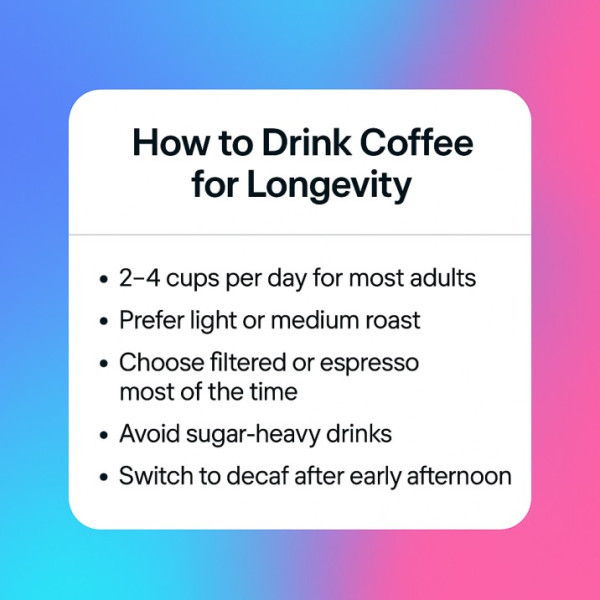
Light and medium roasts preserve far more polyphenols. Over-roasted beans (think: most big-chain coffee) lose the compounds that make coffee a longevity tool.
Single-origin, carefully roasted, freshly ground beans = more bioactive chemistry.
Your barista matters as much as your biochemistry.
How Should You Drink Coffee for Longevity Benefits?
This is where optimization gets practical.
Step 1: Time Your Coffee Wisely
Caffeine peaks 45–60 minutes after drinking.
Use that window for:
> Workouts
> Deep work
> Creative sessions
For athletes, 200–400 mg pre-exercise improves endurance by ~7%.
Step 2: Dose Correctly (The Sweet Spot: 2–4 Cups)
Most of the longevity research clusters around 2–4 cups/day (or 1–2 espressos, depending on strength).
More than that increases risk of:
> Anxiety
> Heart palpitations
> Insomnia
> Reflux
Step 3: Choose Clean Beans
Look for:
> Organic
> Mold-tested
> Freshly roasted
> Light or medium roast
Because mycotoxins and stale beans blunt the benefits you’re drinking coffee for.
Step 4: Keep Your Cup Clean
Skip the dessert drinks.
Sugar bombs undo the metabolic upside by spiking insulin and promoting inflammation.
Best choices:
> Black
> Espresso
> Coffee with a splash of whole milk
> Coffee with MCT (if tolerated)
Step 5: Alternate With Hydration & Tea
Green tea and coffee polyphenols activate complementary pathways.
They’re like two teams working on the same goal: lower inflammation and better metabolic function.
How Much Coffee Per Day Is Best for Longevity?
Research consensus lands at 2–4 cups/day.
Below that: benefits still exist but are modest.
Above that: diminishing returns and increased side effects.
One caveat:
People with anxiety, insomnia, arrhythmias, GERD, or pregnancy should personalize intake — or consider decaf.
Is Decaf Coffee Also Good for Longevity?
Surprisingly… yes.
Studies show decaf provides many of the same longevity benefits thanks to preserved polyphenols and antioxidants.
You lose the performance edge of caffeine, but not the cellular upside.
If you want late-day coffee without wrecking your sleep, decaf is the secret weapon.
Do Brew Methods Change Coffee’s Health Effects?
Yes — more than people realize.

For most people, filtered coffee offers the best risk-benefit ratio.
Who Should Be Careful With Coffee?
Coffee isn’t for everyone.
Be cautious if you have:
> Uncontrolled hypertension
> Heart palpitations or arrhythmias
> Panic/anxiety disorders
> GERD or severe reflux
> Pregnancy or breastfeeding
For these groups, decaf or reduced intake is preferable.
Does Coffee as a Ritual Also Support Longevity?
This is the soft science — but maybe the most important part.
In every Blue Zone studied, shared rituals — tea circles, coffee gatherings, slow mornings — are tied to longer lives.
Coffee isn’t just biochemistry. It’s:
> Connection
> Pause
> Mindfulness
> Routine
And chronic stress, as we know, is one of the strongest accelerators of aging.
Your morning espresso may add years not because of the caffeine, but because of the calm.
In Closing (from Brent)
College-me drank coffee for survival.
Adult-me brews espresso for intention.
Coffee went from a coping mechanism to a precision tool — supporting my workouts, focus, metabolism, and honestly… my joy.
The difference between drinking coffee and using coffee mirrors the difference between aging and longevity.
You don’t need to justify your espresso habit.
Just refine it.
And drink accordingly.
FAQs about
Does coffee really slow biological aging?
Yes. Multiple studies show coffee drinkers have younger epigenetic age and lower rates of major age-related diseases. The effects are strongest at 2–4 cups/day.
What’s the healthiest way to drink coffee?
Black or with minimal milk. Avoid sugar, syrups, and ultra-processed creamers. Choose light–medium roast, high-quality beans.
How much coffee is ideal per day?
Most studies show optimal benefits at 2–4 cups/day. Sensitive individuals should reduce intake or try decaf.
Disclaimers
Medical disclaimer:
Content is for educational purposes only and is not medical advice. Always consult a qualified healthcare professional before making changes to your health regimen.
Affiliate disclosure:
Spannr may receive compensation when you click partner links and make a purchase. As an Amazon Associate, we earn from qualifying purchases.
HIPAA/PHI notice:
Do not send personal medical information to this inbox. Spannr does not collect or store PHI via email.
About the Author