Are Fitness Trackers Good or Bad for Your Health?
Are Fitness Trackers Good or Bad for Your Health?
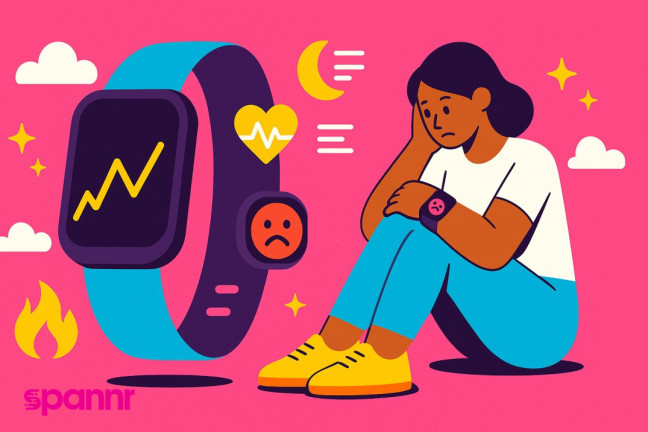
Fitness trackers can be powerful tools for improving movement, sleep, and health awareness. But for some people, constant monitoring fuels anxiety, perfectionism, and burnout. The goal isn’t collecting more data—it's using the right data at the right time.
What Do Fitness Trackers Actually Measure?
Fitness trackers have evolved far beyond step counters. Modern wearables continuously monitor heart rate, sleep stages, HRV, stress, skin temperature, movement patterns, and in some cases oxygen saturation or respiration rates.
Their real purpose is simple: turn invisible habits into visible data.
U.S. adoption has surged. Nearly one-third of adults use a wearable, and millions check their readiness scores, calorie burn, or sleep cycles daily. Research supports their value: meta-analyses show that people who use trackers walk 1,500–1,800 more steps per day on average, improving weight control and cardiovascular fitness.
Sleep tracking also creates awareness of late-night behaviors, caffeine intake, and irregular schedules that undermine recovery.
But while trackers increase visibility, they also increase pressure. With every new metric, the line between feedback and self-judgment begins to blur.
Why Do Fitness Trackers Cause Stress for Some People?
For many users, wearables serve as accountability partners. For others, they become digital supervisors.
A study in Journal of Medical Internet Research found that users with perfectionist or anxious tendencies reported higher stress levels and reduced sleep quality when constantly checking their metrics.
Clinicians are now describing a new phenomenon: orthosomnia—sleep disruption caused by obsessing over sleep data. In other words, some people sleep worse because their watch says they’re not sleeping well enough.
This creates a paradox:
the pursuit of health data becomes the thing that harms health.
Daily readiness scores, calorie targets, and HRV fluctuations can feel like performance evaluations instead of helpful signals. That’s when wearables shift from helpful to harmful.
How Should You Use a Fitness Tracker for Better Health?
Wearables aren’t inherently stressful—it’s the relationship we form with the data.
Here’s a healthier way to use them:
Focus on long-term trends
Day-to-day variation is normal. What matters is your direction over weeks, not a single low recovery score.
Set human goals, not machine goals
Use the data to guide your habits—not dictate your behavior or self-worth.
Turn off unnecessary metrics
Don’t need HRV? Disable it. Don’t want sleep stages? Hide them. Less data often means less stress.
Pair data with context
A low readiness score means something different after a stressful week, a hard workout, or poor nutrition.
Use curiosity instead of judgment
A 2023 Nature Digital Medicine review found that wearables were most effective when paired with self-compassion practices such as mindful movement or reflective journaling.
When you shift from control to curiosity, trackers become tools for awareness—not tools for anxiety.
What Is the Future of Fitness Trackers and Wearables?
The next generation of wearables will move far beyond step counts. New sensors are emerging that track:
> metabolic health
> respiratory patterns
> emotional and cognitive states
AI is also beginning to reshape the experience. Instead of static scores, devices will deliver adaptive coaching—contextual insights that adjust to stress, hormones, sleep, travel, training load, and even mood.
The next frontier isn't “more data”—it's smarter guidance, helping people navigate health decisions without spiraling into obsession.
At Spannr, we’re following how these adaptive systems can support longevity without overwhelming users with constant numbers.
Imagine a tracker that knows when to tell you:
“You’re fine. Stop tracking today.”
That’s where the industry is headed.
In Closing (from Brent)
I love a clean dashboard and a pretty graph as much as anyone. But here’s what I’ve learned: your health isn’t lived in the data—it’s lived between the data points.
The best metric is still the simplest one: how you actually feel when you wake up tomorrow.
FAQs about Fitness Trackers
Can fitness trackers improve long-term health?
Yes. Studies show consistent users walk more, move more, and sleep more regularly. The key is to treat the device as a guide—not a judge.
Why do some people feel anxious when using wearables?
Over-monitoring metrics like HRV or sleep scores can trigger perfectionism and stress, especially in users already prone to anxiety or performance pressure.
How accurate are fitness trackers for sleep and HRV?
They are directionally helpful but not clinical tools. Optical sensors can misread sleep stages or HRV, so weekly trends matter more than daily readings.
What’s the healthiest way to use a fitness tracker?
Disable unnecessary metrics, track trends instead of daily fluctuations, and take breaks from data when needed.
Which fitness tracker is best for longevity?
Oura and WHOOP excel in recovery metrics. Apple Watch is the best all-purpose tool. Garmin dominates performance analytics. The best device depends on your goals.
Disclaimers
Medical disclaimer:
Content is for educational purposes only and is not medical advice. Always consult a qualified healthcare professional before making changes to your health regimen.
Affiliate disclosure:
Spannr may receive compensation when you click partner links and make purchases. As an Amazon Associate, we earn from qualifying purchases.
HIPAA/PHI notice:
Do not send personal medical information to this inbox. Spannr does not collect or store PHI via email.
About the Author