Cold Plunge Like a Pro This Winter
Should You Cold Plunge This Winter?
Cold plunging isn’t about suffering—it’s about stress calibration. When done right, short exposures to cold boost dopamine, metabolism, and immune resilience. Winter is the best time to start, but safety, duration, and consistency matter more than ice.
What Is Cold Plunging and Why Do People Do It?
Brent here—and I’ll be honest: I used to think cold plunges were just influencer cosplay. Then last winter, I committed to doing them consistently, and it completely rewired my view on stress.
Cold immersion—whether it’s a tub, lake, shower, or cryotherapy chamber—is a controlled dose of deliberate discomfort. In physiology, this is called hormetic stress: a short, intentional challenge that forces your body to adapt, grow, and strengthen.
Human trials are stacking up. Cold immersion can increase dopamine and norepinephrine by 200–250%, with mood and alertness effects lasting hours afterward. It strengthens metabolic signaling, enhances HRV, and trains the autonomic nervous system to stay calm under pressure.
Translation: cold plunging isn’t punishment. It’s precision stress that builds resilience across your brain, body, and nervous system.
What Happens to Your Body During a Cold Plunge?
When you enter water between 50°F and 59°F (10–15°C), your body snaps into survival mode. Blood vessels constrict, breathing accelerates, and your brain releases a surge of catecholamines (dopamine, adrenaline, norepinephrine).
This is why a plunge feels like flipping a switch—your physiology goes from idle to “awake” in seconds. That spike is what creates the sustained energy and mental clarity people rave about.
But the benefits depend on how you plunge:
> Too long / too cold: cortisol spikes, immune suppression, compensatory fatigue
> Too short / too warm: you get discomfort without adaptation
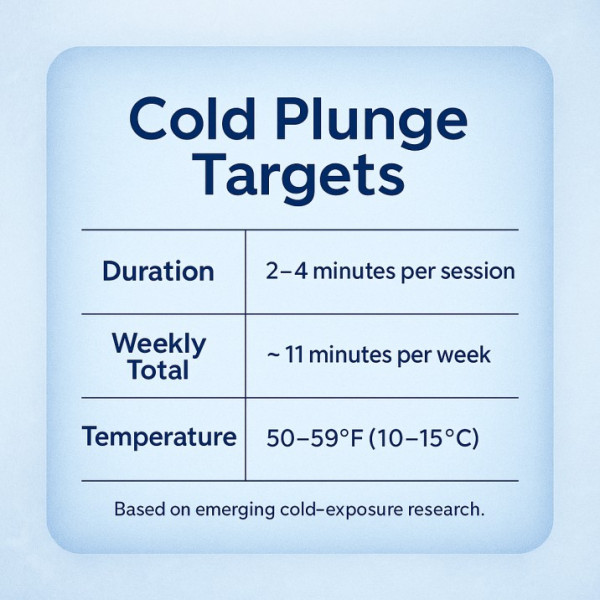
> Just right: 11 minutes per week, spread across several sessions
And timing matters: plunging immediately after strength training may blunt hypertrophy signals, while waiting several hours preserves recovery benefits.
How Do You Cold Plunge Safely as a Beginner?
Let’s call it what it is: no human wakes up craving freezing water. But cold exposure isn’t about comfort—it’s about mastering your internal response.
Here’s the beginner-proof method:
Start Small
Begin with cold showers for 30–60 seconds. Work your way down in temperature over a week or two.
Breathe Before You Enter
Slow, deep nasal breathing activates your parasympathetic system. Once submerged, focus on stillness—avoid hyperventilating.
Aim for 2–4 Minutes
This window is the sweet spot for dopamine release, brown fat activation, and nervous system training.
Warm Up Naturally
Skip the instant hot shower. Let your body reheat itself to amplify circulatory benefits and brown fat activation.
Stay Consistent
Cold exposure works cumulatively—the benefits compound over weeks, not days.
If you have Raynaud’s, hypertension, or cardiac conditions, check with your clinician first. Cold is powerful, and dosage matters.
Does Cold Plunging Actually Support Longevity?
Emerging research shows cold exposure is a legitimate player in the longevity landscape.
Cold plunging can support:
> Mitochondrial biogenesis
> Improved thermogenesis via brown adipose tissue
> Reduced inflammation pathways (IL-6, TNF-α)
> Higher HRV and nervous system balance
> Improved metabolic flexibility
In other words, cold exposure enhances the same cellular pathways that structured longevity programs target: mitochondrial health, inflammation control, and autonomic resilience.
It also trains a psychological skill that’s becoming rare: voluntarily entering discomfort and staying composed. That might be one of the most underrated longevity levers of them all.
What Are the Risks or Side Effects of Cold Plunging?
Cold exposure is safe for most people, but not all. Be aware of:
> Cold shock response in your first 30 seconds
> Blood pressure spikes (cold causes vasoconstriction)
> Numbness or nerve irritation if you stay too long
> Post-plunge fatigue if you overdo intensity
If you plunge outdoors, watch for unsafe currents, ice, or hypothermia risk. Indoors, time and temperature are your biggest variables.
If your body feels “wired” instead of energized afterward, reduce duration or temperature.
What’s Next: Cold as Longevity Training
Cold exposure sits inside a broader framework called metabolic resilience training—the strategic use of controlled stress to increase your body’s adaptive capacity.
Researchers are now exploring how cold interacts with:
> Mitochondrial repair
> Circadian alignment
> Autonomic balance
> Fat browning
> Mood regulation
Think of cold exposure as part of the longevity trifecta:
Sleep
Movement
Stress mastery
Winter just happens to be the cheapest cryotherapy clinic on earth.
The point isn’t to suffer—it’s to signal.
In Closing (from Brent)
I’ve grown to love winter plunges for what they represent: agency. The ability to choose your stress instead of being steamrolled by it.
No supplement, wearable, or injection gives you that kind of control.
So this winter, take the plunge—literally. Not to prove anything, not to chase a dopamine rush, but to practice the art of staying calm in chaos.
Because when you learn to master the cold, everything else in life starts to feel a little warmer.
Are you running a longevity or recovery clinic and thinking about adding cold plunges, contrast therapy, or cryotherapy to your services? Our team at Longevity Clinic Marketing helps clinics turn these protocols into clear offers, clean patient education, and predictable demand. Explore how Clinic OS can help you attract more of the right patients and grow your practice at Longevity Clinic Marketing.
FAQs about Winter Cold Plunging
How long should a cold plunge last?
2–4 minutes per session, aiming for ~11 minutes total per week, appears ideal for most benefits.
Should I cold plunge after workouts?
Wait at least 4 hours post-strength training to avoid blunting adaptation. For endurance work, immediate plunges can support recovery.
Can I get benefits from cold showers alone?
Yes. Even 30–60 seconds of cold exposure triggers dopamine and metabolic activation. Ice isn’t required—it’s just more intense.
Who should avoid cold plunges?
Cold exposure is safe for most people, but those with cardiac disease, uncontrolled hypertension, Raynaud’s, vascular disorders, or who are pregnant should avoid cold plunging unless cleared by a clinician. When in doubt, talk to your healthcare provider before starting.
Disclaimers
Medical disclaimer:
Content is for educational purposes only and is not medical advice. Always consult a qualified healthcare professional before making changes to your health regimen.
Affiliate disclosure:
Spannr may receive compensation when you click partner links and make a purchase. As an Amazon Associate, we earn from qualifying purchases.
HIPAA/PHI notice:
Do not send personal medical information to this inbox. Spannr does not collect or store PHI via email.
Cold-induced vasodilation during sequential immersions of the hand - PubMed
Circadian NAD(P)(H) cycles in cell metabolism - PubMed
Healthy Aging in Times of Extreme Temperatures: Biomedical Approaches
(PDF) Cold and longevity: Can cold exposure counteract aging?
Caloric restriction and longevity: Effects of reduced body temperature - ScienceDirect
About the Author