The Future of Personalized Healthcare and Longevity
What Is the Future of Personalized Healthcare?
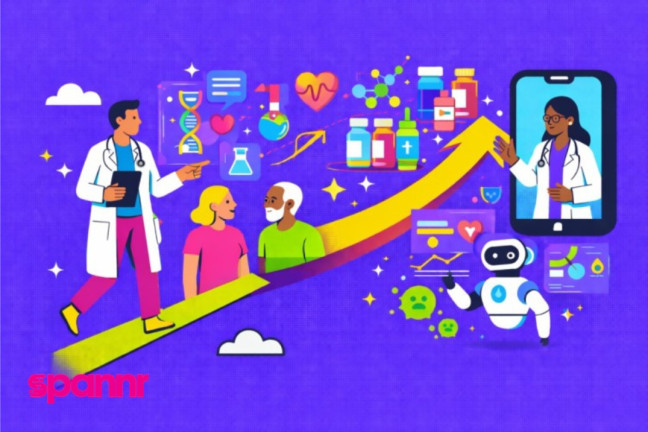
Personalized healthcare is accelerating rapidly, shifting medicine from reactive disease management to proactive optimization. Telehealth now enables access to GLP-1s, NAD+, peptides, hormone optimization, and advanced diagnostics from home. The next decade will merge AI, precision labs, and mobile care into continuous, personalized medicine.
Key terms in personalized healthcare:
Personalized healthcare refers to medical care tailored to an individual’s biology, lifestyle, risk profile, and goals, rather than one-size-fits-all treatment guidelines.
Longevity-first telehealth is a remote, clinician-led care model focused on prevention and optimization, using labs, wearables, and ongoing monitoring instead of episodic visits.
Continuous biomarker monitoring means tracking key health markers over time to detect trends and early risk, rather than relying on a single annual snapshot.
Healthspan describes the number of years a person remains healthy, functional, and independent, not just how long they live.
When I sat down with Greg Rovner, CEO of Healy, one thing was immediately clear: personalized healthcare isn’t a future concept. It’s already happening, and it’s moving faster than traditional medicine can keep up.
I’ve spent enough time in the longevity space to recognize hype when I see it. What Greg and his team are building isn’t another wellness trend. It’s an infrastructure shift, one that removes friction between diagnostics, clinicians, pharmacies, and patients.
And it starts with a simple premise: you shouldn’t have to wait until you’re sick for someone to pay attention to your biology.
Personalized healthcare flips the old model. Instead of diagnosing disease and reacting, it focuses on understanding physiology early, correcting dysfunction upstream, and optimizing healthspan before decline becomes inevitable.
How Is Telehealth Changing Personalized Healthcare?
Traditional healthcare still revolves around the same constraints: rushed appointments, limited lab panels, and symptom-driven decision-making. Most people leave their annual physical with reassurance, not insight.
Telehealth, when done correctly, reverses that dynamic.
> A longevity-first telehealth model prioritizes:
> Advanced diagnostics beyond standard reference ranges
> Root-cause analysis instead of symptom suppression
> Sleep, nutrition, movement, and stress as primary interventions
> Personalized therapeutics like GLP-1s, peptides, NAD+, and hormone optimization
> Ongoing clinician relationships rather than once-a-year check-ins
Healy’s ecosystem expands this further by coordinating care across:
> Longevity physicians
> Hormone and metabolic specialists
> Peptide experts
> Sleep and recovery coaches
> Functional medicine practitioners
> Mobile IV and lab services
> Accredited compounding pharmacies
The innovation isn’t telehealth itself. The innovation is removing silos so biology, data, and treatment actually talk to each other.
Most people don’t need more diagnoses. They need better interpretation and follow-through.
Why Are GLP-1s and NAD+ Central to Personalized Care?
These therapies didn’t become popular because of influencers. They gained traction because diagnostics improved and patients stopped accepting “normal” as optimal.
GLP-1s
Medications like semaglutide and tirzepatide are powerful tools for metabolic repair, insulin sensitivity, and fat loss. The mistake is treating them as weight-loss shortcuts.
In personalized care models, GLP-1s are paired with:
> High-protein nutrition to preserve lean mass
> Resistance training to protect metabolism
> Peptides to support recovery
> Hormone mapping to prevent downstream imbalances
Weight loss without muscle preservation accelerates aging. Precision matters.
NAD+
NAD+ is essential for mitochondrial energy production, DNA repair, and cellular resilience. Levels decline steadily with age, impairing cognition, recovery, and metabolic flexibility.
Clinical NAD+ support may improve:
> Cellular energy output
> DNA repair signaling
> Cognitive clarity
> Stress resilience
It’s not a stimulant. It’s restoring a declining cellular cofactor.
Hormone Optimization
Testosterone, estrogen, DHEA, growth hormone, and thyroid hormones all decline with age. Most people feel the impact long before labs flag a “problem.”
Symptoms show up as poor sleep, low drive, mood changes, loss of strength, and cognitive fog.
Personalized care targets optimal functional ranges, not age-adjusted averages. That distinction defines modern longevity medicine.
How Does Personalized Longevity Care Actually Work?
Despite the perception, longevity care is structured and predictable.
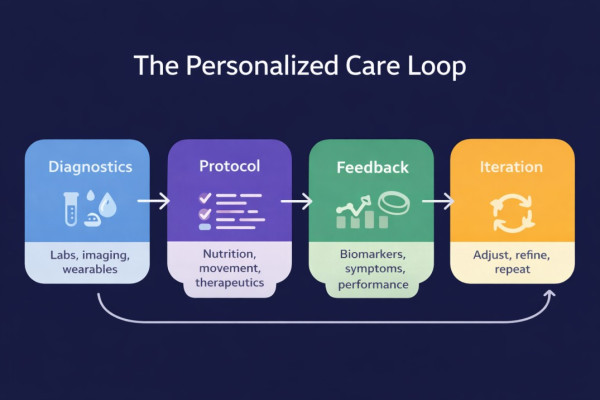
1. Comprehensive Diagnostics
Programs begin with deep lab testing that often includes:
> Metabolic and insulin markers
> Hormones
> Cardiovascular risk markers
> Inflammatory markers
> Micronutrients
> Thyroid function
> Liver and kidney health
This goes far beyond standard annual panels.
2. Goal-Driven Design
Protocols are built around what you want to improve: energy, body composition, sleep, cognitive performance, or long-term disease prevention.
3. Personalized Protocols
Based on biology and goals, care may include:
> GLP-1 therapy
> Peptides
> NAD+
> Hormone optimization
> Sleep interventions
> Nutrition upgrades
> Strength and conditioning guidance
> Mental health and stress regulation
No two plans are identical.
4. Continuous Refinement
Telehealth enables frequent adjustments based on labs, symptoms, and wearable data instead of annual check-ins.
5. Mobile-First Execution
IVs, blood draws, injections, and follow-ups happen at home. Care adapts to life, not the other way around.
This is what healthcare looks like when convenience aligns with outcomes.
What Is the Future of Personalized Healthcare by 2030?
Greg put it best:
“In ten years, we shouldn’t even call it longevity. It should just be healthcare.”
By 2030, expect:
> Continuous biomarker monitoring
> AI-assisted protocol design
> Mobile diagnostics and treatment
> Preventative-first primary care
> Healthspan as the primary metric
This isn’t science fiction. It’s already underway.
How Should You Start Personalized Longevity Care?
Greg’s advice is refreshingly simple:
“Don’t overcomplicate it. Just start.”
The real hierarchy looks like this:
Sleep
If sleep is broken, nothing else works.
Nutrition
Consistency beats perfection.
Movement
Strength training is the strongest predictor of aging well.
Labs
You can’t optimize what you don’t measure.
Targeted Optimization
GLP-1s, NAD+, peptides, hormones amplify the foundation.
Momentum beats mastery.
Closing From Brent
Personalized healthcare isn’t about chasing perfection. It’s about paying attention earlier, correcting smarter, and letting biology work with you instead of against you.
You don’t need to do everything.
You just need to stop waiting.
— Brent
FAQs about Personalized Healthcare and Longevity
Do I need a primary care doctor if I use longevity telehealth?
Yes. Personalized care complements traditional primary care rather than replacing it.
How fast do GLP-1s or NAD+ work?
Many notice changes within weeks, but durable results come from consistency.
Are longevity treatments safe?
When prescribed by licensed clinicians and sourced from accredited pharmacies, they are evidence-supported and safe.
Is personalized lab testing necessary?
Yes. Optimization without data is guessing.
Can longevity care help healthy people?
Absolutely. The biggest gains happen before disease appears.
Disclaimers
Medical Disclaimer:
Content is for educational purposes only and is not medical advice. Always consult a qualified healthcare professional before making changes to your health regimen.
Affiliate Disclosure:
Spannr may receive compensation when you click partner links and make a purchase.
HIPAA/PHI Notice:
Do not send personal medical information to this inbox. Spannr does not collect or store PHI via email.
About the Author