Is Your $400 Wearable Gaslighting You?
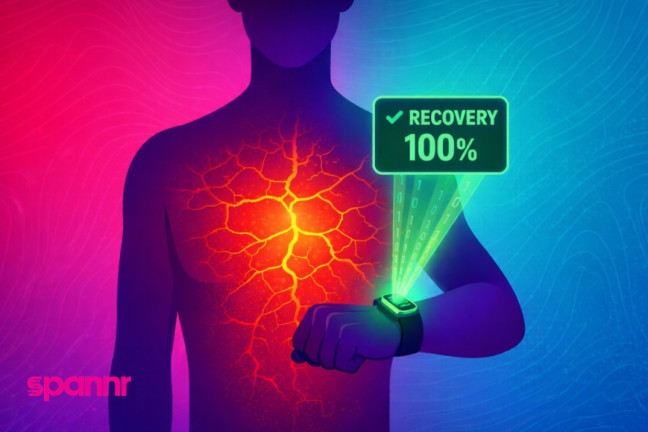
Is Your $400 Wearable Gaslighting You?
HRV is a legitimate autonomic nervous system signal, standardized in clinical research long before Whoop and Oura existed. The problem is not HRV. It’s the measurement method, context sensitivity, and black-box scoring that can turn a useful trend into daily confusion. Use HRV for patterns, not permission slips.
What Is HRV, and What Does It Actually Measure?
If you’ve listened to a single health podcast since 2023, you’ve been told HRV is a “window into your nervous system.” That part is broadly true. Heart rate variability is the beat-to-beat variation in time between heartbeats, influenced heavily by autonomic balance, especially parasympathetic (vagal) activity. In plain English: higher HRV often suggests better recovery capacity and flexibility under stress, while consistently low HRV can reflect chronic strain, illness, or under-recovery.
But HRV is not some modern biohacking invention. The core measurement standards have been formalized for decades, including the landmark 1996 Task Force guidelines that standardized HRV measurement and interpretation in clinical and research settings. The new part is the consumer layer: daily “readiness” scores that pretend a single metric can summarize your whole body like a quarterly earnings report.
Why Is My HRV Wearable Score Wrong (or Not Matching How I Feel)?
This is where the confusion starts. A device can be validated and still feel like it’s trolling you. That’s because most consumer wearables measure HRV using photoplethysmography (PPG), which infers beat timing from blood volume changes, not the heart’s electrical signal (ECG). PPG is convenient and surprisingly good in stable conditions, but it’s also vulnerable to motion, contact quality, skin temperature, peripheral circulation, and signal artifacts.
We have good evidence of both sides. A 2021 validation paper on WHOOP’s wrist-based PPG found small bias for HR and HRV (when filtering is applied) compared to ECG under tested conditions. Meanwhile, newer comparative work continues to show that PPG-derived HRV can diverge from ECG depending on posture, recording length, and real-world noise, even in healthy adults. And for Oura specifically, recent studies show strong correlations between ECG and Oura-derived nocturnal HRV metrics when data-quality thresholds are used, but that’s exactly the point: quality thresholds and context matter.
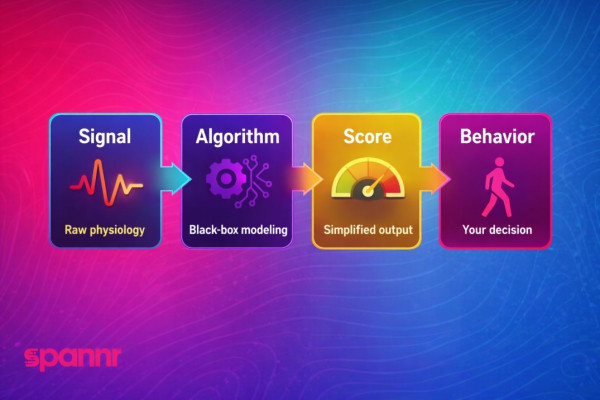
So when you get a bright green “ready” score on a day you feel like a used sponge or a red score when you feel great, your lived experience isn’t automatically wrong. The wearable is measuring something real, but the mapping from signal → score → your actual readiness can be imperfect. Your device is better at trends than absolutes. Think of it as a dashboard indicator, not divine revelation.
| ECG vs PPG | ECG | Wrist PPG |
|---|---|---|
| Signal Source | Electrical | Blood volume |
| Accuracy | Gold standard | Condition-dependent |
| Noise Sensitivity | Low | Moderate–High |
Should You Check HRV Every Day or Ignore It?
If you want this to be useful instead of stressful, do this. HRV is most useful when you treat it like a trend signal and pair it with context:
> Anchor your measurement conditions. HRV needs consistency: same time, same posture, same general routine. The 1996 standards exist for a reason.¹
> Use rolling averages. Daily HRV is noisy. A 7-day trend is usually more meaningful than a single spicy number.
> Interpret HRV as one input, not a dictator. If HRV is low and you feel bad, that’s a clear recovery day. If HRV is low but you feel great, you might downshift intensity and monitor. If HRV is high but you feel terrible, trust your body and rest.
> Stop trying to “hack” HRV with one trick. Breathwork can acutely change HRV (that’s real physiology), but baseline change is more about sleep quality, training load management, alcohol, illness, and chronic stress load.
> Don’t let HRV become a compliance theatre metric. If checking it increases your anxiety, you are actively reducing the thing you claim you’re optimizing.
A quick note on mindfulness, because this one gets oversold: a comprehensive 2021 meta-analysis found mixed results overall and does not support the idea that mindfulness-based interventions reliably raise resting-state HRV compared to controls across trials. Meditation can be great for many reasons, but HRV may not be the guaranteed mechanism people market it as.
If you want a clean, sane HRV strategy, aim for: foundation behaviors first (sleep regularity, movement, strength training, stress recovery), HRV as a trend, and no panicking over one-day fluctuations. Longevity is a system, not a daily performance review. (If you want the bigger framing, this pairs well with our guide on purpose-first longevity: Why Bother With Longevity At All?)
What’s Next for HRV Wearables, and Will They Get More Reliable?
If you zoom out, the trajectory is predictable - better validation, better transparency, and more multi-signal modeling. HRV alone is informative, but HRV + resting HR + sleep staging + temperature deviation + training load is far more robust than HRV in isolation. Oura’s work on nocturnal metrics versus ECG suggests that “quiet conditions” are the future of wearable HRV accuracy: measure when you’re still and asleep, when signal quality is high.
The other major shift we expect to see is more independent validation and less proprietary opacity. When a readiness algorithm won’t explain itself, you’re basically paying for a black box that can’t be cross-examined. Clinicians and coaches don’t love that. And frankly, neither should you.
My pragmatic take: if you’re training hard (high volume, high intensity, or both), HRV can be a useful fatigue management lens. If you’re not, you’ll likely get a bigger ROI from basics: consistent sleep timing, daily walking, strength training twice a week, and reducing alcohol. HRV is not a substitute for the fundamentals. It’s a mirror, sometimes slightly smudged, that can help you steer.
And if you want the clinician-friendly version of “what to measure and when,” you’ll probably enjoy:
> Longevity Doctors: Who They Are, How They’re Certified, & How to Assess Them
> What Is the Optimal Diet for Longevity? A Science-Backed Guide
- Brent
FAQs about HRV Wearables
Is HRV a real biomarker or just wearable marketing?
It’s real science with decades of clinical research, but consumer scoring layers can oversimplify and sometimes mislead.
Why does my readiness score conflict with how I feel?
Wearables often use PPG and proprietary algorithms; context, artifacts, and individual physiology can make daily scores noisy.
Should I trust HRV more than my subjective fatigue?
No. Use HRV as a trend input and a tiebreaker, not a replacement for lived experience and recovery signals.
What’s the best way to track HRV if I’m serious?
Measure consistently (same time/conditions), focus on 7-day trends, and consider ECG-based tools if you need higher fidelity.
Can I improve HRV without tracking it?
Yes. Sleep consistency, smart training load, reduced alcohol, daily movement, and stress recovery typically move HRV more than obsessing over the number.
Are you a longevity clinic or performance practice using HRV and wearables in patient care? If your measurement protocols are ahead of your marketing infrastructure, we can help. Explore how Clinic OS supports growth, reputation, and patient acquisition at Longevity Clinic Marketing.
Disclaimers
Medical disclaimer:
Content is for educational purposes only and is not medical advice. Always consult a qualified healthcare professional before making changes to your health regimen.
Affiliate disclosure:
Spannr may receive compensation when you click partner links and make a purchase. As an Amazon Associate, we earn from qualifying purchases.
HIPAA/PHI notice:
Do not send personal medical information to this inbox. Spannr does not collect or store PHI via email.
About the Author