Peptide Therapy for Longevity: What Works, What Doesn’t

Peptide Therapy for Longevity: Benefits, Risks, and What’s Real
Peptides are short amino-acid chains that act as biological signals, influencing metabolism, recovery, cognition, and hormone pathways. Some peptides are FDA-approved medications, while others are used off-label with emerging evidence. When sourced correctly, dosed conservatively, and paired with lifestyle change, peptide therapy can be a powerful longevity tool—but it is not magic and not risk-free.
Peptide therapy explained (important distinctions):
FDA-approved peptide drugs are medications that have completed formal clinical trials and received FDA approval for specific medical indications (for example, GLP-1–based therapies for metabolic disease).
Compounded peptides are custom-prepared formulations made by licensed compounding pharmacies and prescribed by clinicians. Many are used off-label, with evidence that may range from emerging to preliminary.
Research chemicals are laboratory compounds sold without regulatory approval, quality controls, or clinical oversight. These are not intended for human use and should be avoided in medical or longevity contexts.
What Is Peptide Therapy—and Why Is It Suddenly Everywhere?
If you spend any time in longevity or functional medicine circles, you’ve heard peptides mentioned constantly. That can make them feel like a trend. They aren’t.
Peptides are fundamental biology. As Peter “The Peptide Guy” Riviera explained to me, “A peptide is just a short chain of amino acids. Your body already makes thousands of them.”
Insulin is a peptide.
Oxytocin is a peptide.
GLP-1 medications like semaglutide are peptides.
What’s changed isn’t the science. It’s visibility.
Longevity clinicians, metabolic medicine, and the explosion of GLP-1 drugs have pulled peptides into mainstream awareness. At the same time, people are looking for interventions that influence cellular behavior without shutting down natural systems. That’s exactly where peptides shine.
Peptides don’t force outcomes.
They send signals.
And in biology, signals matter.
What Do Peptides Actually Do for Longevity?
Peptides influence longevity by modulating key biological systems rather than overriding them. Their effects are highly context-dependent and work best when paired with foundational habits.
The main longevity-relevant categories include:
Metabolic peptides (GLP-1 agonists)
Originally developed for diabetes, GLP-1 peptides reduce appetite, improve insulin sensitivity, and lower cardiometabolic risk. Large trials show benefits extending beyond weight loss, including reduced cardiovascular events in high-risk patients.
Mitochondrial and cellular signaling peptides
Peptides involved in energy regulation and oxidative stress signaling may support cellular efficiency and resilience, particularly in aging tissues.
Cognitive and neuroregulatory peptides
Certain peptides are being explored for attention, stress regulation, and neuroprotection. Evidence varies widely, and many uses remain off-label.
Immune-modulating and anti-inflammatory peptides
Some peptides influence immune signaling and tissue repair, with applications being explored in post-viral syndromes and chronic inflammation.
Growth-hormone–axis peptides
Peptides like CJC-1295 and ipamorelin stimulate endogenous hormone signaling rather than replacing hormones directly, which may reduce suppression risk when used appropriately.
The key point: peptides are not replacements for sleep, nutrition, or exercise. They amplify the system you already have.
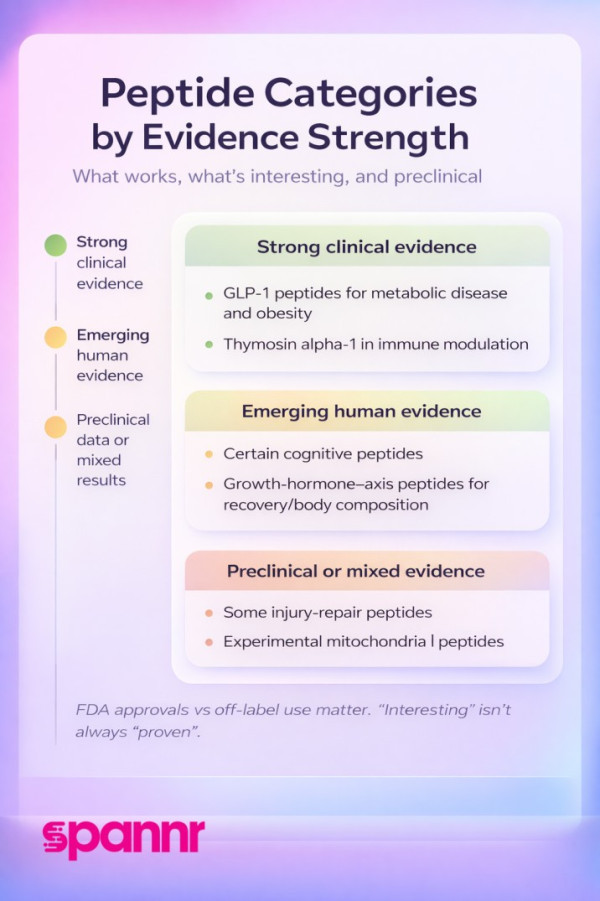
Which Peptides Have the Strongest Evidence—and Which Are Still Emerging?
This is where clarity matters.
Some peptides are backed by large, randomized human trials and FDA approval. Others are supported by small human studies, animal data, or mechanistic plausibility. Clinics that blur this distinction do patients a disservice.
Stronger clinical evidence
> GLP-1 peptides for metabolic disease and obesity
> Thymosin alpha-1 in immune modulation (specific indications)
Emerging but limited human evidence
> Certain cognitive peptides
> Growth-hormone–axis peptides for recovery and body composition
Preclinical or mixed evidence
> Some injury-repair peptides
> Experimental mitochondrial peptides
Longevity medicine requires intellectual honesty. “Interesting” is not the same as “proven,” and patients deserve to know the difference.
Is Peptide Therapy Safe? What Clinicians Get Wrong
Most peptide-related problems do not come from the molecules themselves. They come from how they are used.
Common failure points include:
> Poor sourcing or lack of certificates of analysis (COAs)
> Overdosing in pursuit of faster results
> No baseline labs or follow-up monitoring
> Framing peptides as stand-alone solutions
As Peter emphasized, “If you’re pushing doses just to see bigger changes, you’re doing it wrong.”
Responsible peptide therapy follows a simple framework:
> Start low
> Monitor biomarkers and symptoms
> Adjust slowly
> Stop if risk outweighs benefit
This is medicine, not supplementation theater.
Are Peptides Legal—and What Patients Should Understand
Some peptides are FDA-approved drugs prescribed for specific conditions. Many others are compounded and used off-label under physician supervision.
Patients should be wary of:
> “Research chemical” labeling
> Vendors unwilling to share COAs
> Claims of guaranteed outcomes or cures
> One-size-fits-all peptide stacks
Legitimate peptide therapy looks boring from the outside. That’s usually a good sign.
What’s Next for Peptides in Longevity Medicine?
The future of peptides is not weekly injections forever.
We’re already seeing:
> Clinically dosed nasal delivery systems
> Early progress toward orally bioavailable peptides
> Targeted topicals for skin and connective tissue
> Integration into broader longevity protocols rather than isolated use
The direction is clear. Peptides are becoming quieter, more precise, and more integrated into mainstream care.
Key Takeaway
Peptide therapy represents a bridge between traditional medicine and longevity science. When used responsibly, peptides can influence aging-related pathways in ways that are biologically intuitive and clinically useful.
But they only work when paired with lifestyle change, proper monitoring, and realistic expectations.
Signals matter.
Context matters more.
In Closing (from Brent)
I’ve watched peptides go from whispered conversations in back rooms to front-page clinic offerings—and that shift is overdue.
But here’s the truth: peptides don’t make you disciplined, consistent, or healthy. They reward those things.
Longevity isn’t about finding the molecule that saves you from your habits. It’s about using the right tools to reinforce the habits worth keeping.
Peptides aren’t the future because they’re flashy.
They’re the future because they speak the body’s native language.
And when biology understands the message, it tends to respond.
FAQs about Peptide Therapy for Longevity
Are peptides safe for long-term use?
Many peptides have favorable safety profiles, but safety depends on sourcing, dosing, and monitoring. Long-term use should always be clinician-supervised.
Can peptides replace medications like TRT or ADHD meds?
They may reduce reliance in some cases, but they are not replacements. Any medication changes should be clinician-directed.
How quickly do peptides work?
Some effects appear within weeks, while others influence long-term pathways and require months of consistent use.
Do GLP-1 peptides cause weight regain after stopping?
Weight regain reflects behavior changes, not peptide failure. Peptides support habit change but do not replace it.
How do I choose a reputable peptide clinic?
Look for clinician-led care, transparent sourcing, conservative dosing, lab monitoring, and realistic claims.
Disclaimers
Medical Disclaimer:
This content is for educational purposes only and does not constitute medical advice. Always consult a qualified healthcare professional before starting peptide therapy.
Affiliate Disclosure:
Spannr may receive compensation from partner links. This does not influence editorial integrity.
HIPAA / PHI Notice:
Do not send personal medical information via email. Spannr does not collect or store PHI.
About the Author