The Longevity Mindset: How Your Beliefs About Aging Change How You Age
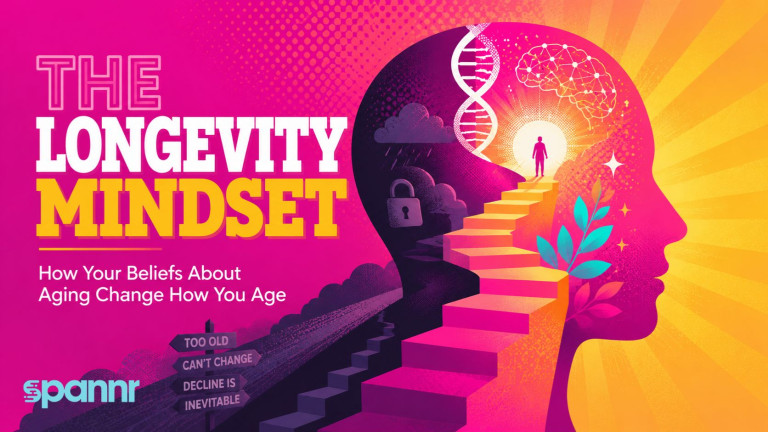
The Longevity Mindset: How Your Beliefs About Aging Change How You Age
Co-authored by Dr. James Johnson and Dr. Thomas Lewis, producers and co-stars of Forever Young
Your Aging Mindset May Affect How You Age
The way you think about aging may influence more than your mood. Research suggests that age beliefs, optimism, and a sense of purpose are associated with cognitive health, physical function, cardiovascular outcomes, and longevity.
That does not mean mindset replaces medical care, exercise, nutrition, sleep, or prevention. It means the story you carry about aging may shape the behaviors, stress responses, and long-term health patterns that influence how well you age.
Key Takeaways
- Aging is not always a one-way slide into decline.
- Dementia becomes more common with age, but it is not an inevitable part of normal aging.
- Positive beliefs about aging are associated with better cognitive and physical outcomes.
- Optimism has been linked with lower cardiovascular risk and lower all-cause mortality.
- Purpose in life may be a meaningful survival-related variable.
- Mindset should support medical care and healthy behaviors, not replace them.
The Myth We Swallowed Whole
There’s a story we tell about getting old, and most of us absorbed it so early and so completely that we’ve never thought to question it.
The story goes like this: after a certain age, the body begins its long, inevitable surrender. The mind follows. Decline is the universal destination, and everything else is just delay.
It’s a compelling story, with the grim authority of common sense.
And, in measurable and important ways, this story is wrong.
Consider a few examples before we go further. Raymond Chandler didn’t begin writing fiction seriously until he was fired from his job as an oil executive during the Great Depression. His first novel was published when he was 51, and The Long Goodbye was published when he was 65.
Long-distance swimmer Diana Nyad completed the 110-mile swim from Cuba to Florida at age 64, after failing the swim in her younger years.
These are not just feel-good exceptions to the rule of aging as inevitable decline. They are reminders that the rule itself may need rewriting.
That matters because healthspan is not just about adding years. It is about preserving capacity, autonomy, contribution, and the ability to keep participating in life.
What the Numbers Actually Show
Roughly 80% of the general public believes dementia is an inevitable consequence of normal aging. So do about 65% of healthcare professionals, according to Alzheimer’s Disease International.
Both groups are wrong.
Dementia becomes more common with age, but it is not the same thing as normal aging. That distinction matters because when people believe decline is inevitable, they may be less likely to seek help, change risk factors, or notice what can still improve.
Research by Becca Levy and Martin Slade at the Yale School of Public Health challenges the idea that older age moves in only one direction. Their work tracked older adults over time and found that meaningful cognitive and physical improvement can happen later in life.
Nearly 32% of participants showed meaningful cognitive improvement over the study period. Twenty-eight percent improved physically. And those gains were not limited only to people who started healthy.
Even some participants who began the study with cognitive deficits later recovered to normal function.
The takeaway is not that aging is easy or that decline never happens. The takeaway is more useful: late-life improvement is possible, and the beliefs people hold about aging may help shape whether they keep engaging in the behaviors and opportunities that support that improvement.
Optimism Isn’t Soft. It’s Cardiovascular.
When cardiologists talk about risk factors, they usually talk about blood pressure, LDL cholesterol, smoking history, diabetes, family history, and exercise.
They are less likely to ask how you feel about the future.
But the data suggests that the question may matter.
A meta-analysis published in JAMA Network Open pooled results from 15 studies and 229,391 participants. It found that optimism was associated with a lower risk of cardiovascular events and lower all-cause mortality.
That does not mean optimism is a drug. It does not mean positive thinking prevents heart disease by itself. But it does suggest that optimism may belong in the broader conversation about prevention, behavior, and long-term resilience.
Why would this be true?
A positive outlook may help reduce the body’s response to chronic stress. It may also make people more likely to take actions that protect their future health: sleeping consistently, exercising regularly, eating better, maintaining relationships, and following through on care.
Optimism does not work by magic. Small behavioral and biological advantages can accumulate over the years into very different outcomes.
The Snowball You Didn’t Know Was Rolling
Yale psychologist Becca Levy developed what she calls Stereotype Embodiment Theory to explain something quietly important: the age-related beliefs you absorbed earlier in life may influence your own health as you get older.
The mechanism is more specific than it sounds.
Negative stereotypes about aging do not necessarily feel personal when you are young. They apply to “older people,” not to you. But eventually, the category changes. The stereotypes you absorbed about aging begin to apply to your own body, mind, and expectations.
Once that happens, belief can become a feedback loop.
If you expect decline, you may move less, challenge yourself less, recover with less confidence, or assume symptoms are just “getting older.” Over time, those choices can shape function.
The reverse can also be true. Positive age beliefs may support engagement, movement, social connection, learning, and persistence. Better function can reinforce vitality, which can drive even more improvement.
The snowball can roll either way.
This connects to the broader concept of biological age, which looks beyond calendar years and considers how the body is actually functioning. Beliefs are not the whole story, but they may influence the behaviors and stress pathways that shape how aging shows up in real life.
Purpose Is Not a Luxury. It’s a Survival Variable.
The Japanese concept of ikigai is often translated loosely as a reason for being. In longevity conversations, it points to something deeper than productivity or ambition: the internal sense that life is meaningful and worth participating in.
That sense of purpose appears to matter.
A JAMA Network Open analysis using data from the Health and Retirement Study found that people with lower life purpose had a higher risk of mortality than those with higher life purpose.
The pattern is telling. The association appeared especially strong for some conditions related to stress and inflammation pathways, including cardiovascular and gastrointestinal conditions.
This does not mean purpose prevents disease by itself. It means purpose may be one of the psychological variables that help organize a person’s life around healthier behaviors, stronger relationships, better stress regulation, and continued engagement.
Purpose changes how the future feels.
And when the future feels worth protecting, people often behave differently in the present.
What This Actually Means
The clinical takeaway is not complicated, but it does require a shift in how we think about aging.
The current paradigm often treats decline as the default trajectory and everything else as a lucky deviation. The data suggests a more nuanced picture.
Many older adults can improve. Beliefs about aging can influence behavior. Optimism is associated with better cardiovascular outcomes. Purpose may be linked with survival. And the stories people carry about aging are not merely abstract ideas floating around in the mind.
They can become biological, behavioral, and social forces.
That does not mean your thoughts control everything. Genes, environment, access to care, chronic disease, income, safety, medication, nutrition, sleep, and exercise all matter.
But unlike your genes or family history, beliefs can change.
That makes mindset a real therapeutic opportunity hiding in plain sight.
For readers who want clinical support, a qualified longevity doctor can help translate prevention, risk assessment, lifestyle medicine, and long-term health planning into a safer, more personalized approach.
What You Can Do With This Science
You do not need to pretend aging is effortless. You do not need toxic positivity. You do not need to deny pain, illness, grief, or limitation.
A better longevity mindset is more grounded than that.
It might sound like this:
“I am aging, and I still have agency.”
That belief can change what you do next.
You might walk more because your body is still adaptable. You might ask better questions at the doctor because symptoms are not always “just age.” You might learn something new because your brain is not finished. You might protect your sleep because your future still matters. You might stay connected because relationships are not optional extras. You might build purpose because meaning is part of health.
The most powerful longevity intervention may not always begin with a molecule, a scan, or a procedure.
Sometimes it begins with a narrative.
When we replace the story of aging as inevitable decline with a story in which growth, adaptation, and late-life flourishing remain possible, we give people a better reason to act.
And action, repeated over time, is where healthspan is built.
Medical Note
This article discusses population-level research and associations. It is not medical advice and should not be used to diagnose, treat, or prevent any condition. Mindset can support healthy aging behaviors, but it does not replace medical care, medication, diagnosis, or treatment from a qualified clinician.
FAQs
Can your mindset really affect aging?
Your mindset may affect aging indirectly and biologically. Research links positive age beliefs with better cognitive and physical outcomes, likely through stress, behavior, motivation, and long-term health habits.
Is dementia a normal part of aging?
No. Dementia becomes more common with age, but it is not an inevitable or normal part of aging. Persistent memory or cognitive changes should be discussed with a qualified clinician.
Does optimism prevent heart disease?
Optimism does not guarantee protection from heart disease, but large observational studies associate optimism with lower cardiovascular event risk and lower all-cause mortality. It should complement, not replace, medical care.
What is a longevity mindset?
A longevity mindset is the belief that aging can include growth, adaptation, prevention, purpose, and continued agency. It does not deny aging. It rejects the idea that decline is the only possible path.
What is one practical way to build a healthier aging mindset?
Start by replacing “I’m too old for this” with “What version of this is right for me now?” That small shift keeps the door open to movement, learning, connection, and improvement.
https://dornsife.usc.edu/magazine/the-longevity-guide/
https://www.diamandis.com/blog/longevity-mindset-part-2
https://www.diamandis.com/blog/longevity-mindset-part-2
https://fortune.com/well/article/building-longevity-mindset-live-longer/
https://www.strategiccoach.com/resources/the-multiplier-mindset-blog/how-to-foster-a-longevity-mindset-reap-the-benefits
About the Author